Celadonsoft Logo
//

Open Banking API Integration Guide for Fintech and SaaS Products

31 August 2026Author: Alexei Falco358 Views

An open banking API enables financial and non-financial products to access permitted payment-account data or initiate supported banking operations through standardized interfaces. Depending on the market, regulatory model, bank, and provider, this may include account information, balances, transactions, payment initiation, or other supported account-related capabilities.

Products may use open banking connectivity for bank-account verification, personal finance, accounting automation, cash-flow analysis, affordability assessment, and account-to-account payment initiation.

Open banking API integration is not a single endpoint connection. It is an end-to-end product workflow involving consent, bank authentication, permissions, tokens, external data, asynchronous status changes, provider-specific behavior, synchronization, and operational exception handling.

Content
  1. What an Open Banking API Actually Enables
  2. What an Open Banking API Actually Enables
  3. Core Open Banking APIs and Product Objects
  4. How Open Banking API Integration Works End to End
  5. Direct Bank APIs vs. an Open Banking Aggregator
  6. Integration Risks and Failure Modes
  7. Security Requirements for Open Banking Integration
  8. Open Banking vs. Embedded Finance vs. Banking API Integration
  9. What to Decide Before Implementation Starts
  10. From Sandbox to Production
  11. How Celadonsoft Approaches Banking API Integration

Open Banking API Integration Guide for Fintech and SaaS Products

An open banking API enables financial and non-financial products to access permitted payment-account data or initiate supported banking operations through standardized interfaces. Depending on the market, regulatory model, bank, and provider, this may include account information, balances, transactions, payment initiation, or other supported account-related capabilities.

Products may use open banking connectivity for bank-account verification, personal finance, accounting automation, cash-flow analysis, affordability assessment, and account-to-account payment initiation.

Open banking API integration is not a single endpoint connection. It is an end-to-end product workflow involving consent, bank authentication, permissions, tokens, external data, asynchronous status changes, provider-specific behavior, synchronization, and operational exception handling.

What an Open Banking API Actually Enables

The foundation of open banking is controlled access to banking data and operations through standardized interfaces. Access is based on the user’s authorization, while the available permissions, duration, authentication requirements, and revocation mechanisms depend on the applicable scheme, provider, and bank.

Most product integrations rely on two main capability groups: account information and payment initiation. Consent, authentication, and connection lifecycle management form the control layer around both.

Data Access

Account information services may allow a product to retrieve permitted data from a user’s payment account through a regulated provider or another applicable partner model. A personal finance application may categorize spending, a lending product may use the data as one input into cash-flow or affordability assessment, and a SaaS platform may use account information to support bank-account verification.

External banking data still needs to be distinguished from the product’s internal data. An API may return balances and transactions, but the product must determine how that information is mapped, stored, refreshed, retained, and used in internal workflows.

Data freshness is critical. Account and transaction data may not represent the bank’s latest state at the moment the product displays it. Update frequency, pending-transaction handling, historical coverage, and refresh mechanisms vary between providers and institutions. The internal model should therefore preserve provider timestamps, synchronization state, data provenance, and known freshness limitations.

Payment Initiation

Where supported, a checkout or another product workflow may allow the user to authorize an account-to-account payment instead of entering card details or switching to a separate payment method. After selecting a bank, the user completes the required authentication and authorizes the payment according to the applicable flow.

From the product’s standpoint, payment initiation is an asynchronous workflow. A successful API response does not necessarily mean that the payment has settled or that the recipient can already use the funds. Depending on the provider, a payment may move through states such as awaiting authorization, authorized, submitted, pending, executed, settled, rejected, or failed.

The product therefore needs an internal payment-state model that maps provider-specific statuses to business actions such as order confirmation, service activation, support escalation, or reconciliation.

Consent as a Control Layer

Unlike a conventional server-to-server integration, open banking is built around user authorization. A product can access only the data and operations covered by the applicable permission and authorization flow. The consent experience should explain what information or action is being requested, for what purpose, for which accounts, and how the user can manage or revoke the connection.

Core Open Banking APIs and Product Objects

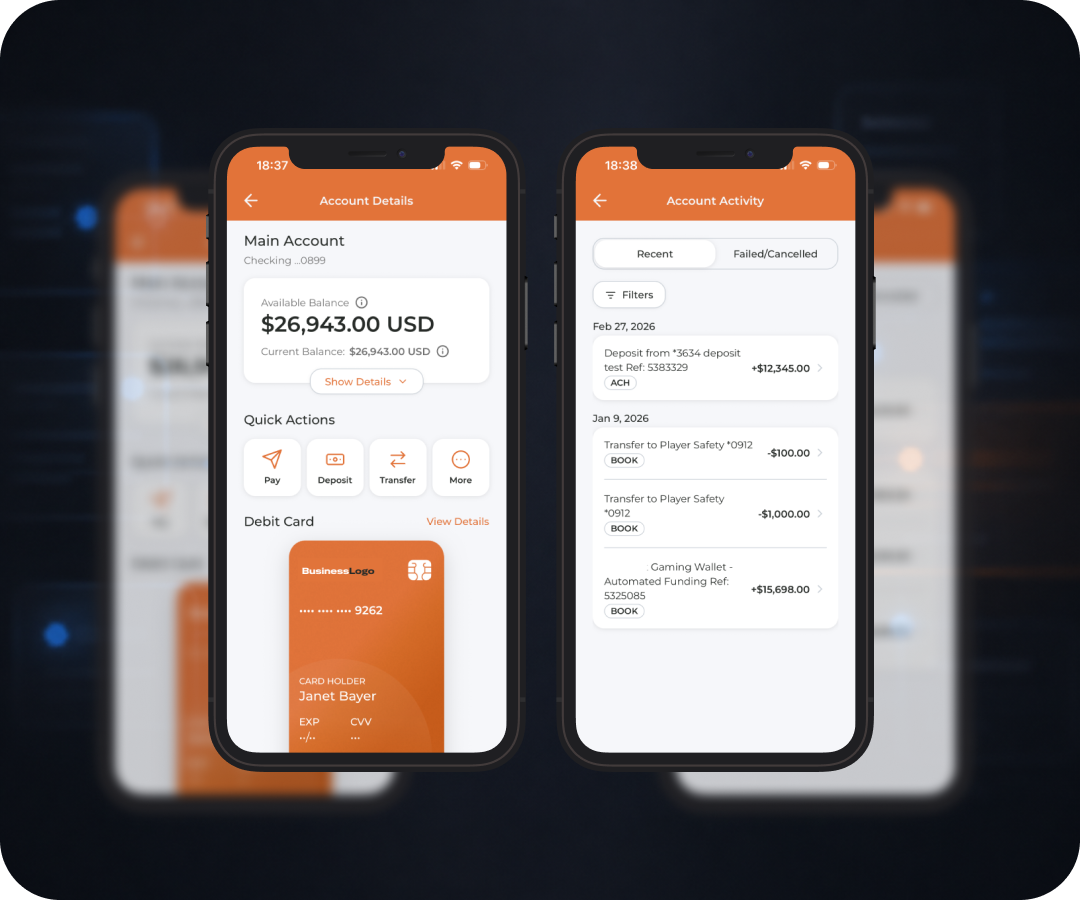
The exact endpoints depend on the market, applicable standards, and chosen provider. In practice, product teams usually work with several connected objects, including accounts, balances, transactions, payments, and consents.

Accounts and Balances

Account APIs may return external account identifiers, display names, currency, account type, ownership details, and other fields supported by the provider and user permission. The product also needs rules for relinking accounts, handling closed or unavailable accounts, and preventing an external account from being connected incorrectly to multiple internal profiles.

Providers may expose different balance types, such as available, current, booked, or interim balances, each with its own meaning and timestamp. The product should preserve the original balance type instead of collapsing every value into a generic balance field.

A provider balance should not automatically be treated as the real-time source of truth for every internal financial decision.

Transactions

Transaction APIs return available account activity within the historical range and update model supported by the institution and provider. Where available, the product may receive transaction status, currency, booking and value dates, descriptions, merchant information, category data, provider identifiers, and bank references, not only the amount and date.

Data granularity and description formats differ between institutions and providers. A normalization layer is therefore required to map external data to the product’s internal model and handle pending transactions that later become booked, disappear, or return with changed identifiers or descriptions.

Payment Initiation

Payment initiation APIs create or submit a payment instruction and direct the user through the required authorization flow. A typical sequence may include:

  1. The product creates an internal payment intent or consent request.
  2. The user selects their bank or account.
  3. The user is redirected to or presented with the bank-controlled authentication flow.
  4. The user authenticates and authorizes the payment.
  5. The payment instruction is submitted for processing.
  6. The product receives or retrieves subsequent status updates.
  7. The internal workflow is updated according to the resulting payment state.

Payment initiation should not be designed as a synchronous request-success workflow. The product must preserve the operation state across redirects, callbacks, provider processing, status changes, and possible user abandonment.

Consent Lifecycle

Consent has a lifecycle that should be modeled independently from account and payment objects. Depending on the market and provider, it may expire, require reconfirmation or reauthorization, change scope, or be revoked.

The consent model should define:

  • the requested permissions and purpose;
  • the accounts and data covered;
  • the provider and external consent identifiers;
  • creation, authorization, expiration, and revocation status;
  • reconfirmation or reauthorization rules;
  • what happens to previously stored data;
  • which product actions remain available after access ends;
  • how users view, renew, or disconnect the connection.

Consent therefore belongs in the integration architecture, not only in the onboarding experience: its current state determines which API calls and product actions remain permitted.

How Open Banking API Integration Works End to End

Open banking integration is a sequence of connected stages controlled by the product, provider, and bank. A complete flow may look like this:

  1. The user chooses to connect an account or initiate a payment.
  2. The product creates an internal connection or payment intent.
  3. The requested permissions or payment instruction are presented.
  4. The user selects a bank and completes the required authentication.
  5. The product receives an authorization callback or completion signal.
  6. The system requests account data or submits the payment instruction.
  7. The provider and bank process the request.
  8. The product receives a webhook, polls the status, or performs an incremental synchronization.
  9. The internal state is updated, and the corresponding business action is triggered.
  10. The operation enters reconciliation, monitoring, or exception handling where required.

Each stage needs defined success, failure, timeout, cancellation, and recovery behavior. The external provider controls part of the banking process, while the product remains responsible for maintaining an explainable internal state and deciding how each external event affects its own workflow.

Bank Authentication and Authorization

After the bank or institution is selected, the user completes the required authentication and authorization flow. This allows the institution to authenticate the user and confirm the requested data access or payment instruction.

The implementation varies by scheme and provider, but OAuth 2.0, OpenID Connect, redirect-based authorization, and related financial-grade security profiles are common components. The product should not collect or store the user’s online-banking credentials. Authentication should remain within the bank- or provider-controlled flow supported by the applicable integration model.

Tokens and authorization artifacts must be stored securely and associated with the correct user, consent, provider, and environment. The integration should account for token expiration, refresh behavior, revoked permissions, invalid grants, key rotation, denied authorization, interrupted redirects, and callback validation errors.

Data Retrieval or Payment Initiation

After successful authorization, the product can perform the permitted data request or continue the corresponding payment flow.

For account data, the provider response passes through an internal processing layer. The product maps external accounts to internal profiles, stores provider and institution identifiers, and determines which information needs to be refreshed. External identifiers should always be stored with their provider and institution context because they cannot be assumed to remain stable or reusable across different integrations.

For payments, the product creates an internal payment record before or alongside the external request, stores provider references, and tracks subsequent authorization, execution, settlement, failure, and reconciliation states. An accepted API request must not be treated as proof that the payment has completed.

Webhook and Synchronization Handling

Depending on provider capabilities, the product may use authenticated webhooks, status polling, scheduled synchronization, or incremental data retrieval to detect external changes.

The webhook handler should verify the event before processing, record its provider identifier and relevant metadata, map it to the correct internal object, and apply the update idempotently. Event payloads should be retained only where necessary and permitted by the applicable security and data-retention rules.

The architecture should not assume that every webhook arrives once, immediately, or in the expected order. Provider documentation should determine whether polling or a reconciliation job is also required.

For account activity, the product should follow the provider’s update model, such as full refresh, cursor-based incremental synchronization, or notification-triggered retrieval. The sync process must account for new, modified, pending, booked, and removed transactions without duplicating previously processed records.


Direct Bank APIs vs. an Open Banking Aggregator

A product may integrate directly with individual banks or connect through an aggregator that normalizes access across multiple institutions.

The main differences include:

  • Coverage. Direct integrations are built separately for selected institutions. An aggregator provides access to multiple institutions through one provider.
  • Control. A direct connection may provide greater control over a specific bank relationship and implementation. An aggregator makes the product more dependent on its supported capabilities and abstraction.
  • Onboarding. Direct integrations may require separate technical and operational onboarding for every connection. An aggregator creates one primary provider relationship, although production requirements can still vary by market.
  • Data model. Direct integrations expose bank-specific fields and statuses. An aggregator provides a degree of normalization, but institution-level differences may still surface.
  • Maintenance. Every direct connection requires monitoring, updates, and support. An aggregator reduces the number of external connections but introduces provider-level coverage and service limitations.
  • Migration. Direct integrations may tie parts of the logic to individual banks. With an aggregator, teams must consider provider dependency and the complexity of a future migration.

An aggregator can reduce the number of external integrations, but it does not remove the product’s responsibilities. The platform still needs its own consent references, account and payment states, exception handling, observability, and rules for provider outages or unsupported institutions.

Teams should compare target markets, bank coverage, consumer and business account support, data freshness, historical depth, payment types, status granularity, consent flows, synchronization behavior, sandbox quality, pricing, service levels, and production support before choosing a model.

Planning an Open Banking Integration?

Define the required account or payment capabilities, provider model, consent lifecycle, internal states, synchronization strategy, security controls, and operational ownership before committing to a specific API.

asc

Integration Risks and Failure Modes

Inconsistent Provider Behavior

Open banking standards define a common interaction model but do not guarantee identical behavior across banks and providers. Available fields, account coverage, transaction data, authentication flows, status transitions, consent rules, error responses, and webhook behavior can vary significantly.

Provider-specific adapters can map external accounts, transactions, consents, errors, and payment statuses into a stable internal product model. Business logic should rely on that model rather than being tied directly to one provider’s response structure.

Provider-specific raw data and identifiers may be retained where necessary and permitted for troubleshooting, reconciliation, or audit, subject to defined security and retention rules.

Rate Limits

Providers often limit API request volume, which is especially important for products that regularly synchronize accounts and transactions for many users.

Continuous polling can create unnecessary load and lead to rate-limit errors. Before implementation, the team should define which data requires regular updates, where webhooks can be used, and when delayed synchronization is acceptable.

Rate-limit handling should be defined by provider and endpoint, with appropriate backoff, scheduling, concurrency control, and prioritization between user-triggered and background requests.

Retries and Idempotency

A temporary network error or timeout does not prove that the original operation failed. Read operations are less likely to create duplicate financial actions, but their retries still need limits, backoff, and awareness of provider rate limits.

State-changing requests require stricter controls because the provider may have accepted the original request even when the product did not receive the response. Where supported, the same idempotency key should be reused when retrying the same logical operation.

The product must also enforce internal deduplication and preserve the relationship between the business operation, request key, provider request, and resulting external identifiers.

Observability and Auditability

For a financial integration, knowing that an API request failed is not enough. The team needs visibility into correlation IDs, request and response statuses, timestamps, provider events, synchronization attempts, and internal state changes.

This information allows the team to reconstruct the lifecycle of a specific operation and identify where a discrepancy occurred. An audit trail is particularly important for disputed or failed operations: the system should show when the user granted authorization, what request was sent, what the provider returned, and how the internal state changed afterward.

Logs and audit records should not expose access tokens, banking credentials, or unnecessary personal and financial data. Operational dashboards should distinguish provider availability problems, authentication failures, expired permissions, synchronization delays, rejected payments, and internal processing errors.

celadonsoft-banking-api-integration-cover.jpg


Security Requirements for Open Banking Integration

Open banking security is not limited to the user’s authentication at the bank. The product also needs controls across its own integration and operational layers.

Key areas include:

  • secure storage and rotation of API credentials, signing keys, and tokens;
  • callback URL validation and protection against authorization-flow attacks;
  • webhook signature verification and replay protection;
  • encryption in transit and at rest;
  • least-privilege access to banking data;
  • data minimization and defined retention rules;
  • separation of sandbox and production credentials;
  • masking of sensitive information in logs and support tools;
  • audit trails for consent, data access, payment requests, and state changes;
  • incident and provider security-event response procedures.

The exact controls and certification requirements depend on the market, provider, regulatory role, and type of data or payment capability involved.

Open Banking vs. Embedded Finance vs. Banking API Integration

These concepts describe different layers of a financial product rather than competing implementation approaches.

  • Open banking provides consent-based access to supported payment-account data or payment initiation under a particular market or scheme. Examples include retrieving account transactions and offering pay by bank.
  • Open banking API integration is the engineering workflow that connects those capabilities to a product. It covers consent, authentication, data mapping, synchronization, and payment-state handling.
  • Banking API integration is a broader category of bank and financial-provider connectivity. It may include open banking, treasury APIs, BaaS, payouts, virtual accounts, or direct bank APIs.
  • Embedded finance describes how a financial capability becomes part of a customer or operational journey, such as connecting bank transactions to accounting workflows or adding pay by bank to checkout.

Open banking may therefore form one part of an embedded finance product, while banking API integration provides the broader technical connectivity required by the architecture.

What to Decide Before Implementation Starts

Before selecting a provider or writing integration code, teams should define the decisions that affect the product architecture, regulatory model, and ongoing operations.

  • Required capability: whether the product needs bank-account verification, account and balance data, transaction synchronization, payment initiation, or, where supported, account-holder verification.
  • Markets and institution coverage: which countries, banks, currencies, account types, payment methods, and consumer or business accounts must be supported.
  • Regulatory and provider model: whether the company connects through a regulated provider, operates under its own authorization, or uses another model permitted in the target market.
  • Integration model: whether the control offered by direct bank connections justifies their additional implementation and maintenance cost compared with an aggregator.
  • Internal data and state model: how users, institutions, accounts, consents, tokens, transactions, payments, and provider events map to internal objects.
  • Synchronization and failure handling: how the product handles freshness, webhooks, polling, retries, idempotency, timeouts, duplicate events, and delayed statuses.
  • Operational ownership: who investigates failed connections, missing transactions, rejected payments, expired consents, reconciliation differences, provider incidents, and customer disputes.
  • Production readiness: which sandbox tests, institution-specific checks, security reviews, provider onboarding steps, monitoring, support procedures, and rollout criteria are required.

The applicable regulatory model and division of responsibility should be validated with qualified legal, compliance, risk, and provider teams before the architecture is finalized.

From Sandbox to Production

A successful sandbox request does not prove that the complete product workflow is ready for production. Sandboxes may provide simplified institution behavior, stable test data, and a narrower set of authentication and failure scenarios.

Before launch, teams should test:

  • successful, denied, abandoned, and expired authorization;
  • multiple accounts and unsupported account types;
  • incomplete or delayed transaction history and pending-to-booked changes;
  • payment rejection, timeout, and long-running pending states;
  • duplicate, delayed, and out-of-order events;
  • token or consent expiration;
  • institution downtime, provider rate limits, and delayed synchronization;
  • reconciliation and manual exception handling;
  • customer-support visibility and recovery actions.

Production rollout should begin with clear institution coverage, controlled user exposure, active monitoring, and defined escalation paths to the provider. The operations and support teams should be able to identify the current state of a connection or payment without relying on engineering to reconstruct every case manually.

How Celadonsoft Approaches Banking API Integration

Before major implementation decisions are finalized, we map the complete banking workflow: participants, permissions, external providers, account and payment states, data exchanges, systems of record, synchronization rules, and operational exceptions.

We then design a stable internal integration model with provider-specific adapters, separating product business logic from external API behavior. This reduces the impact of adding, replacing, or extending provider integrations while preserving consistent internal states and operational visibility.

As an official Priority Passport engineering partner, Celadonsoft has hands-on experience with product-level capabilities across accounts and balances, banking and treasury integrations, fund movement, payment workflows, reconciliation, and operational tooling.

We apply this experience through our banking API integration services, while keeping provider, product, and operational responsibilities explicitly separated. When bank connectivity forms part of a broader financial platform, our fintech software development services can cover the surrounding product architecture and connected operational workflows.

Our co-founder and CEO, has not just a thumb in business processes. He also loves to write. His entrepreneurship and management experience allows him to create content of high value for the customers and the blog readers.

Get Our Newsletter

We won’t spam you. Pinky promise.

Drop Us a Message

Attach file
Offices

USA

2807 N Parham Rd, Ste 320, Henrico, VA

+19295905986

Portugal

Av. Engenheiro Duarte Pacheco 1250, Lisbon

Poland

Ul. Humanska 8, Warszawa

UAE

Hamsah A, Al Karama, Office 21/02, Dubai

© Celadonsoft. All Rights Reserved. 2026

Privacy Policy