



Banking API Integration Services for Fintech Platforms
Connect banking infrastructure to your product without losing control of transaction states, balance data, or operational exceptions.
Celadonsoft defines the integration operating model—sources of record, provider boundaries, event processing, synchronization, reconciliation, and recovery—before implementing the API layer. This architecture-first approach is backed by hands-on experience as an official Priority Passport engineering partner.
 based on 28 reviews

What production-ready banking API integration requires
Banking API integration connects a fintech product or digital platform with infrastructure for accounts, balances, transactions, transfers, payments, payouts, treasury, or reconciliation.
An endpoint may be simple to call. A financial operation continues after the response. Provider events may arrive late, more than once, or out of order. Requests may be retried, and the provider record may temporarily disagree with the state shown inside the product.

We design how these conditions should be processed across the backend, customer experience, admin tools, and finance operations. The result is an integration that remains traceable when normal and failure paths diverge.
A successful API response is not the end of a financial operation. The product must still know what changed, which system is authoritative, and how to recover when records disagree.
Banking and financial APIs we integrate
We connect specialized banking and financial APIs through one integration architecture, with explicit boundaries between provider-specific behavior and product-specific financial logic.
Connections for account details, cash visibility, transfers, settlements, reserves, and approvals. We define permission boundaries, transaction lifecycles, and the authoritative record for each operation.
Accounts, virtual accounts, sub-accounts, balances, and transaction histories. We specify how provider records map to the product and how changes are synchronized and reconciled.
Payment initiation, transfers, disbursements, refunds, and fees. We model the full transaction lifecycle, including webhooks, retries, idempotency, timeouts, and exception paths.
.png)
Retrieval, normalization, and matching of provider, ledger, and accounting records. Supported scenarios can be reconciled automatically, while unresolved mismatches are routed for operational review.
Provider-specific accounts, statuses, errors, timestamps, and webhook payloads are mapped to a stable internal schema. This limits provider coupling and reduces the impact of adding or changing a connection.
What must be defined before implementation
A production integration needs explicit rules for credentials, data ownership, event processing, transaction states, recovery, reconciliation, and operational visibility. We define those rules before major implementation decisions are locked in.
Banking providers may use OAuth 2.0, API keys, mTLS, JWTs, or signed requests. We define how credentials are stored, refreshed, and rotated; how access is separated between services; and how sensitive actions are authorized and audited.
Outputs: access model, credential lifecycle, permission boundaries, and provider security requirements.
Authentication and access control
Banking providers may use OAuth 2.0, API keys, mTLS, JWTs, or signed requests. We define how credentials are stored, refreshed, and rotated; how access is separated between services; and how sensitive actions are authorized and audited.
Outputs: access model, credential lifecycle, permission boundaries, and provider security requirements.
Authentication and access control
We define webhook authentication, durable event processing, retry and backoff rules, idempotency keys, duplicate detection, and policies for delayed or out-of-order events. Repeated delivery should not create a repeated financial effect.
Outputs: event-processing contract, retry and idempotency rules, and reprocessing paths for failed events.
Webhooks, retries, and idempotency
We define webhook authentication, durable event processing, retry and backoff rules, idempotency keys, duplicate detection, and policies for delayed or out-of-order events. Repeated delivery should not create a repeated financial effect.
Outputs: event-processing contract, retry and idempotency rules, and reprocessing paths for failed events.
Webhooks, retries, and idempotency
We map provider statuses to a stable internal transaction lifecycle and define allowed transitions. For each financial state, we assign the authoritative source and specify how updates are synchronized and reconciled across customer, admin, and reporting interfaces.
Illustrative state mapping:
{
"provider_event": "transfer.updated",
"provider_status": "pending_settlement",
"internal_state": "PROCESSING",
"idempotency_key": "transfer_84291"
}
Transaction states and synchronization
We map provider statuses to a stable internal transaction lifecycle and define allowed transitions. For each financial state, we assign the authoritative source and specify how updates are synchronized and reconciled across customer, admin, and reporting interfaces.
Illustrative state mapping:
{
"provider_event": "transfer.updated",
"provider_status": "pending_settlement",
"internal_state": "PROCESSING",
"idempotency_key": "transfer_84291"
}
Transaction states and synchronization
Provider outages, rate-limit responses, lost or delayed webhooks, and partial processing are expected production conditions. We design monitoring, structured event histories, safe reprocessing, reconciliation paths, and operational tools around them.
Finance and operations teams should be able to trace a transaction, see where records diverged, and decide whether the system can recover automatically or requires review.
Failure recovery, reconciliation, and auditability
Provider outages, rate-limit responses, lost or delayed webhooks, and partial processing are expected production conditions. We design monitoring, structured event histories, safe reprocessing, reconciliation paths, and operational tools around them.
Finance and operations teams should be able to trace a transaction, see where records diverged, and decide whether the system can recover automatically or requires review.
Failure recovery, reconciliation, and auditability
• Provider-specific data is normalized into a stable internal model.
• Webhooks are authenticated, retryable, and safe to process more than once.
• Transaction states and allowed transitions are explicitly defined.
• Delayed, duplicated, and out-of-order events are handled without creating duplicate financial effects.
• Reconciliation and exception handling are part of the transaction workflow.
• Credentials can be rotated, and critical failures are monitored, alerted, and traceable.
• Operations teams can investigate routine transaction issues through administrative tooling.
Production-readiness checklist
• Provider-specific data is normalized into a stable internal model.
• Webhooks are authenticated, retryable, and safe to process more than once.
• Transaction states and allowed transitions are explicitly defined.
• Delayed, duplicated, and out-of-order events are handled without creating duplicate financial effects.
• Reconciliation and exception handling are part of the transaction workflow.
• Credentials can be rotated, and critical failures are monitored, alerted, and traceable.
• Operations teams can investigate routine transaction issues through administrative tooling.
Production-readiness checklist
How we deliver banking API integrations

We map the required financial workflows, review provider documentation and sandbox behavior, and identify capability gaps, dependencies, and responsibility boundaries.
Outputs: provider-fit matrix, integration inventory, responsibility map, and initial risk register.

We define service boundaries, authoritative systems, provider normalization, transaction states, event processing, synchronization, and reconciliation paths.
Outputs: data-flow map, systems-of-record matrix, internal schema, transaction-state model, and retry and reconciliation rules.

We implement API clients and adapters, authentication, event processing, synchronization logic, customer-facing flows, and administrative workflows as testable increments.
Outputs: working integration, event-processing layer, operational interfaces, monitoring hooks, and technical documentation.

We test normal and failure paths, including duplicates, delays, timeouts, provider outages, partial processing, and inconsistent events. We then support rollout, observability, and provider changes.
Outputs: failure-path test matrix, reconciliation checks, monitoring and alerts, launch checklist, operational runbook, and support handover.
.png)
Integrating a new provider or stabilizing an existing connection?
Discuss the transaction lifecycle and failure paths before the scope is locked.

Priority Passport API integration experience
Celadonsoft is an official Priority Passport engineering partner. Our engineers work at the implementation level across accounts and balances, banking and treasury integrations, fund movement, payment workflows, reconciliation, and operational tooling.
This hands-on experience helps us identify provider constraints, data dependencies, and operational edge cases early. We apply it to Priority Passport implementations and to provider-neutral architectures; the product’s business rules remain independent of any one vendor.
Accounts and balances
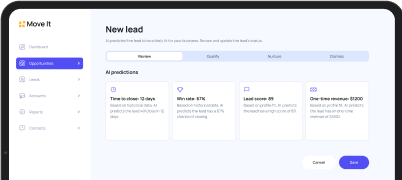
Banking and treasury
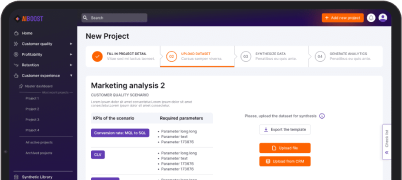
Fund movement

Payment workflow
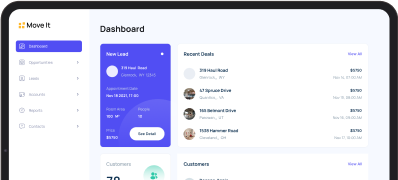
Reconciliation
Operational tooling

Banking API integration use cases
We are strongest when banking connectivity is part of the product’s business logic and must remain explainable as providers, transaction volume, and operational workflows evolve.
Connect banking, payment, treasury, and reconciliation services while preserving a coherent internal transaction model.
Implement the provider connectivity behind accounts, balances, payments, or payouts embedded in a SaaS product, marketplace, or operational platform.
Coordinate account creation, batch payouts, transaction statuses, failures, and reconciliation for employees, contractors, or partners.
Connect account data, funding, disbursement, repayment, and transaction visibility to the product’s lending workflows.
Add transfers, treasury actions, approvals, and finance operations to business workflows with appropriate roles and administrative controls.
Selected banking API integration case studies
.png)
.png)
These areas overlap, but they answer different buyer needs

Open banking integration
Consent-based access to bank-account data or payment initiation through regulated open banking interfaces.

Banking API integration
The technical connectivity layer: provider authentication, data mapping, event processing, transaction-state synchronization, failure recovery, and reconciliation.

Embedded finance development
The broader product capability: how accounts, payments, balances, payouts, or lending fit the user experience, business model, responsibilities, and operations.

Fintech software development
End-to-end product delivery across customer experience, financial logic, backend, integrations, administrative tooling, and long-term platform evolution.
.png)
Defining the broader financial capability? Explore our embedded finance development services.
Building or modernizing the full platform? Explore our fintech software development services.
FAQ

Banking API integration connects a fintech product or digital platform with banking and financial infrastructure for accounts, balances, transactions, transfers, payments, payouts, treasury, or reconciliation. Production integration also defines how provider data, events, transaction states, and exceptions are handled inside the product.

Not always. Open banking usually focuses on consent-based access to bank data or payment initiation through regulated interfaces. Banking API integration is broader and may include account infrastructure, balances, treasury, fund movement, payouts, provider-specific workflows, and reconciliation.

Yes. Celadonsoft is an official Priority Passport engineering partner and can support integration architecture, API implementation, accounts and balances, fund movement, payment workflows, reconciliation, and operational interfaces around the platform.
The timeline depends on the provider, number of workflows, security requirements, transaction-state complexity, reconciliation scope, existing architecture, and readiness of the sandbox and documentation. After discovery and provider assessment, we provide a delivery roadmap and implementation estimate.

We define a stable internal model, assign the authoritative source for each financial state, and specify authenticated webhook processing, retries, idempotency, allowed state transitions, synchronization, and reconciliation rules.
Yes. We can assess authentication, provider coupling, event handling, transaction states, data synchronization, monitoring, reconciliation, and operational tooling. The goal is targeted remediation based on risk—not an automatic full rewrite.

We test API contracts and the full operation lifecycle, including duplicate and delayed events, timeouts, provider outages, partial processing, conflicting statuses, reprocessing, reconciliation, monitoring, and operator workflows.
Planning a banking API integration or reviewing an existing one?
Discuss the provider landscape, transaction model, data flows, failure paths, and operational requirements with a fintech architect before major implementation decisions are locked in.